
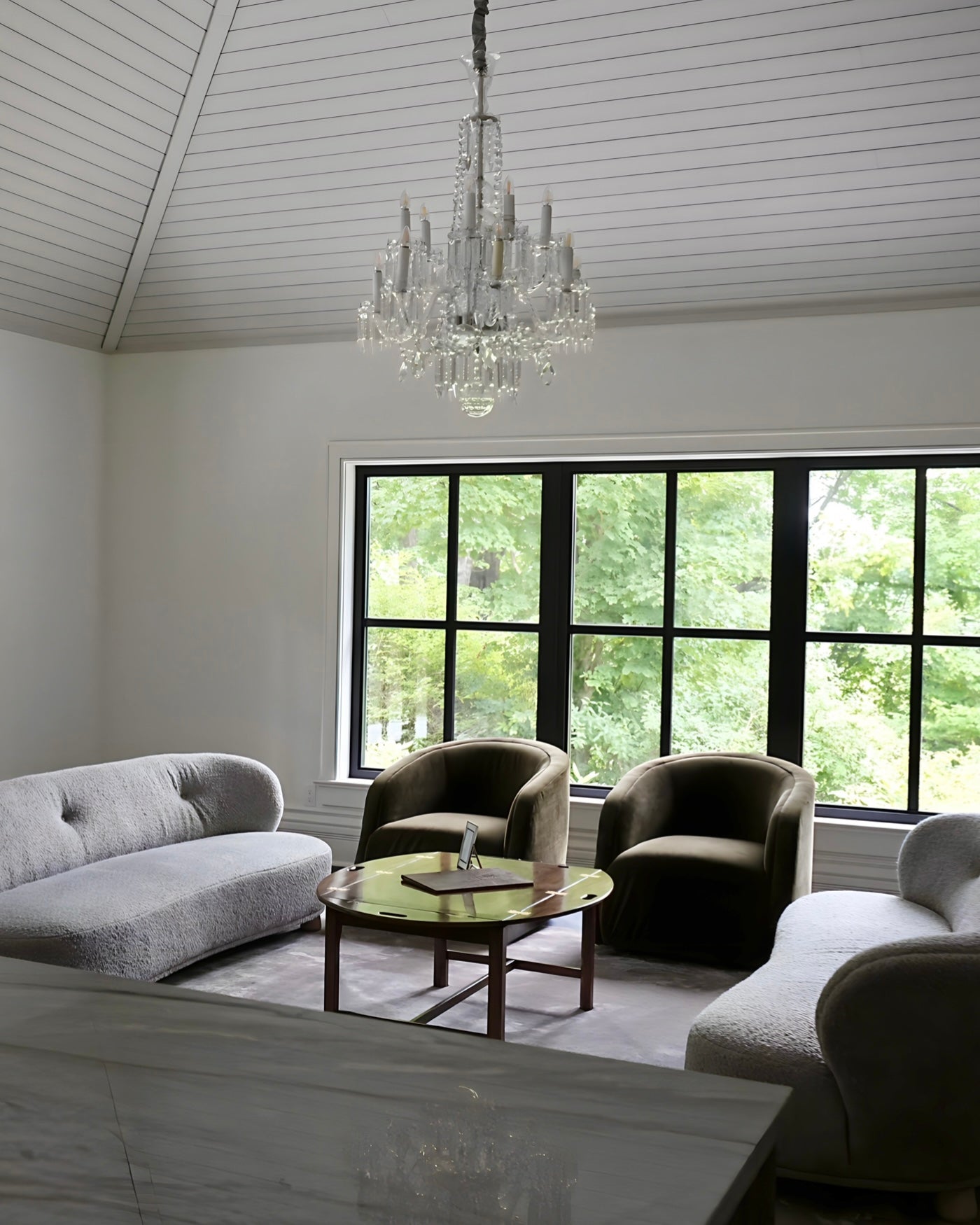
The Gatehouse at Cruickston Park was originally built in 1960 for the farm manager, Bill McLean, and his wife. It is uniquely located outside the property’s entrance gate on a height of land that overlooks the flood plain and the river. It is easily accessible by Blair road and has its own isolated lot that backs onto a mature forest. Similar to its physical positioning relative to the rest of the farm estate, the Gatehouse traverses both the real world and Cruickston’s world.
The exterior of the house is a handsome blend of old and new, including large windows allowing visual cues to the natural surroundings. One gets to enjoy nature without being fully in it. There are two artisan patios lined with rhododendron, one with a gas fire pit, visible from the living room; both structured and tidy. However, it’s the first impression while walking through the front entrance of the Gatehouse that is most impactful: beautiful windows, open spaces, vaulted ceiling, and quality finishes. The details are breath taking. Marble, glass, crystal, brass, stone et al in balanced proportions - Cruickston Park’s trademark.
By 1960 Matthew ‘Wilks’ Keefer had been resident on the property for ten years and well into his stride in his stewardship of it. Although his predecessor, Aunt Kate, had opted to focus on her family’s tradition of breeding and racing Standardbred horses at an international level, Wilks opted to celebrate his gentleman grandfather’s second passion for raising cattle.
Raising cattle in the 1800’s would have been more of an eclectic occupation since oxen was a more practical choice. One hundred years later, Wilks junior recognized cattle breeds had not yet evolved in Canada so he took it upon himself to raise the general quality of beef cattle by breeding, showing and developing local Hereford herds.
Bill McLean was instrumental in this initiative and through their combined effort of selecting, diarizing, observing, repeat, they accomplished Wilks’ goal. The beneficiaries of this achievement were not just Ontario’s local herds and associations, the University of Guelph received years of breeding data and underlying knowledge. The Gatehouse silently marks this passage in time.
